Home » Vertical Lift Fabric Hangar Doors
Vertical Lift Fabric Hangar Doors
At Aviation Hangar Doors Company, we design and manufacture Vertical Lift Fabric Hangar Doors that deliver space-saving efficiency, weather protection, and operational safety for demanding aviation environments.
Proudly living up to our promise — “We protect the birds when on ground” — these doors are trusted by civil aviation terminals, helicopter hangars, and MRO (Maintenance, Repair, Overhaul) facilities where reliability and clear openings are essential.
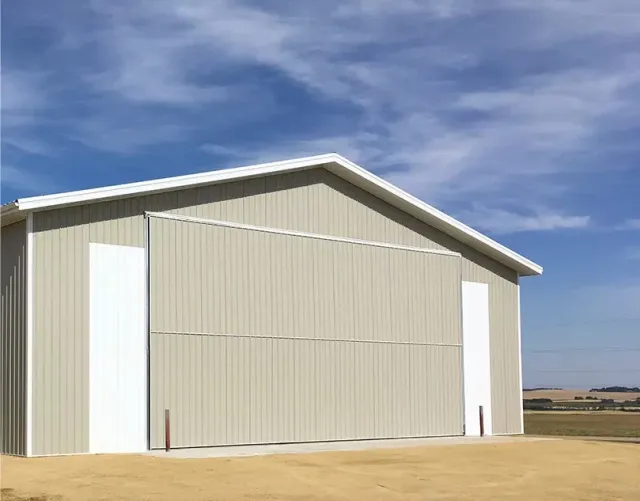
Why Choose Vertical Lift Fabric Doors?
Key Advantages:
- Space-Saving Operation: Doors slide vertically, eliminating the need for side parking space.
- Quick Installation: Lightweight structure reduces installation time and eliminates concrete foundation requirements.
- Weather-Resistant Design: Built to withstand wind and rain, ensuring uninterrupted hangar operations.
- Durability: Reinforced with steel side guides and metal parts, with fabric sections engineered for strength.
- Unobstructed Access: No floor rails, enabling seamless aircraft entry and exit.
- Robust Strength: Steel-reinforced components ensure long service life.
- Safety Compliance: Equipped with locking systems that engage during lifting malfunctions.
- Certified Standards: Built in accordance with CE directives and EN aviation door safety standards.
- Operational Simplicity: Smooth vertical motion with bottom beam lifting and fabric folding.
- Energy Efficiency: Special seals reduce hot/cold air exchange, improving insulation.
- Control Options: Operated via a simple control panel with visual and audible signals.
- Emergency Readiness: Includes manual override with hand-crank functionality for smaller installations.
Key Features Our Vertical Lift Fabric Hanger door
- Space-Conscious Design: Panels lift vertically, eliminating the need for side parking space.
- Quick Installation: Lightweight build allows rapid setup, reducing labor time and costs.
- Cost-Efficient Construction: No bottom rails or heavy foundations required, lowering overall project costs.
- Unobstructed Apron Access: No tracks on the ground, enabling smooth aircraft and vehicle movement.
- Energy Efficient: Integrated seals prevent airflow, minimizing heat and cold loss.
- Weather Resistant: Built to withstand wind and rain, ensuring uninterrupted operations.
- Structural Strength: Reinforced with steel side guides and durable metal parts, including a 600 mm steel-reinforced fabric section for long-term reliability.
- Safety Priority: Anti-fall locking mechanism engages automatically during any malfunction, preventing uncontrolled movement.
- Simple Operation: Smooth vertical movement with a three-button control panel (open, close, stop) and audible/visual signals.
- Manual Emergency Operation: Equipped with a hand crank for manual control in case of power failure (not recommended for very large doors).
- Low Maintenance: Designed with long-lasting components to minimize downtime, supported by 24/7 technical service.
Applications
Vertical lift fabric doors are ideal for:
- Civil aviation hangars with apron space limitations
- Helicopter hangars requiring rapid access
- MRO facilities handling multiple aircraft classes
- Airport support facilities requiring weather-proof closures
Our Service Lifecycle
Every telescopic hangar door is supported by our complete engineering lifecycle approach:
- Installation – precision-engineered assembly with quality control at every stage.
- Maintenance – scheduled preventive servicing to extend operational life.
- Repair – rapid response for fault resolution and component replacement.
- Retrofit – modernization of older systems with upgraded automation and sealing technology
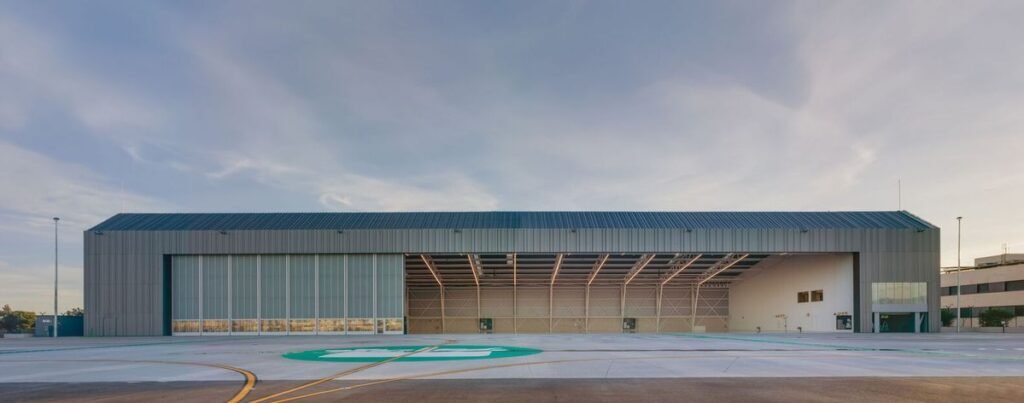
Technical Highlights
Lorem Ipsum is simply dummy text of the printing and typesetting industry. Lorem Ipsum has been the industry’s standard dummy text ever since the 1500s, when an unknown printer took a galley of type and scrambled it to make a type specimen book.
- Durable Construction: All-steel framed panels engineered for long-term reliability.
- Weather Sealing: Designed with integrated seals for protection against wind, rain, and dust.
- Automation Ready: Compatible with advanced control systems for smooth, secure operation.
- Safety Compliance: Built to meet international aviation standards for operational safety and performance.
testimonial
What Clients Say
Frequently Asked Questions - Telescopic Hangar Door Maintenance
Where are Vertical Lift Fabric Hangar Doors commonly used?
They are widely used in civil aircraft hangars, MRO (Maintenance, Repair, Overhaul) facilities, and helicopter hangars, especially where apron space is limited.
How do Vertical Lift Fabric Doors save space compared to other hangar doors?
Unlike sliding or telescopic doors, Vertical Lift systems move upward and fold neatly, requiring no side parking space or floor rails, making them ideal for space-constrained environments.
Are these doors weather-resistant?
Yes. The doors are engineered to resist wind and rain, ensuring hangar operations remain uninterrupted in adverse weather conditions.
How strong are Vertical Lift Fabric Hangar Doors?
The doors feature steel side guides, reinforced metal parts, and a fabric section with steel construction at least 600 mm thick. Each part is carefully selected to provide high strength and durability.
What safety features are included?
The system prioritizes safety:
- Blades in the side guides lock the door automatically if the lifting system malfunctions.
- Compliance with CE standards and EN safety directives ensures operational reliability.
Can the doors be operated manually in case of a power failure?
Yes. A manual hand crank is provided for emergency operation, though it is not suitable for very large door sizes.
Do Vertical Lift Fabric Doors help with energy efficiency?
Yes. Special seals installed in the lower beam prevent unwanted airflow, reducing hot/cold air exchange and improving energy efficiency.
What kind of maintenance is required?
These doors are designed for low maintenance, with 24/7 service support available from our technicians to minimize downtime and ensure continuous operation.